01
Where it started
The starting point was simple: I wanted to make a game of my own, with my own hands. For three and a half years at Tencent I had been making other people's games better — this time, I wanted to build something I love, and take every step myself, from the first idea to the store.
02
Gameplay anyone can pick up
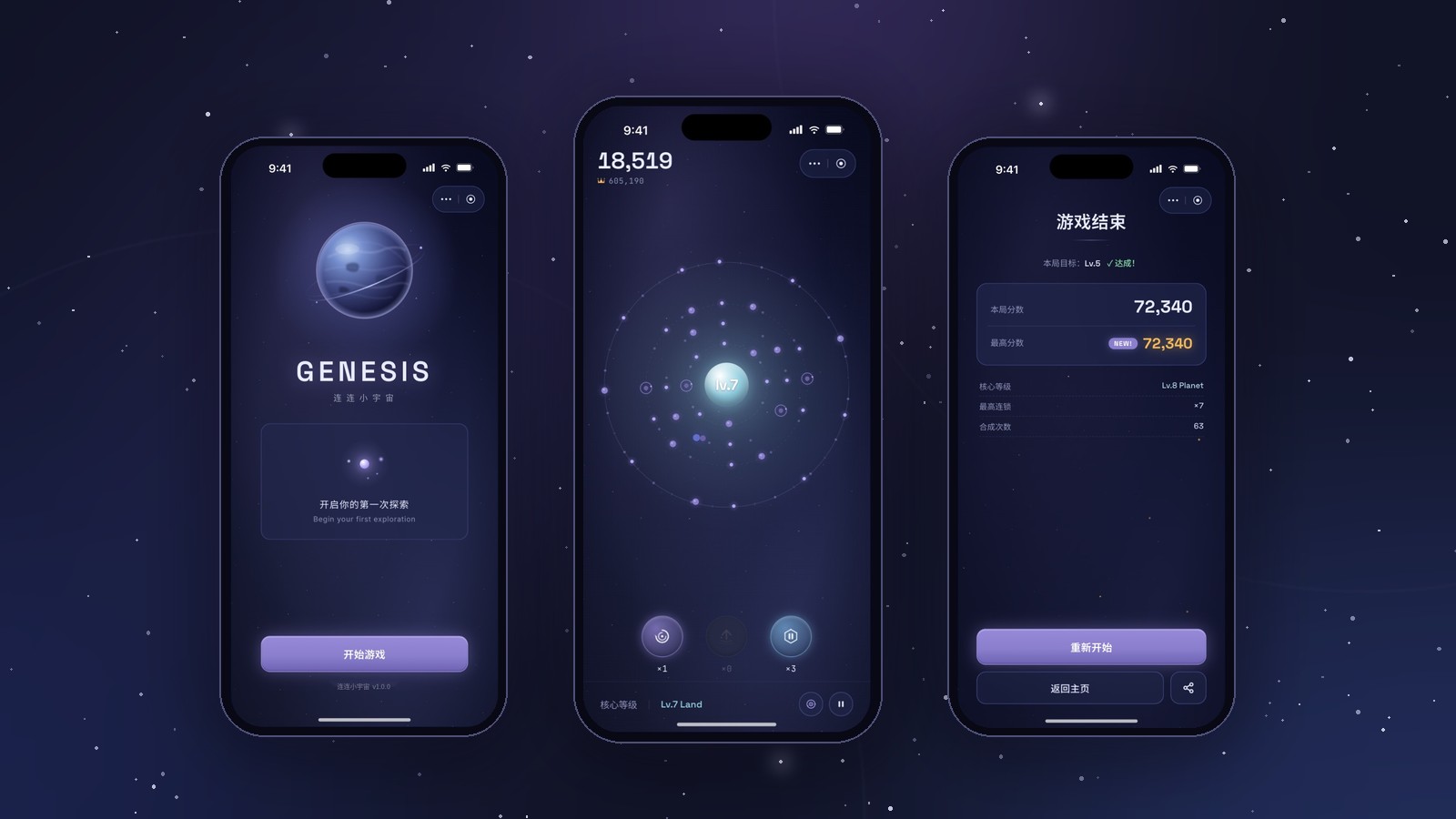
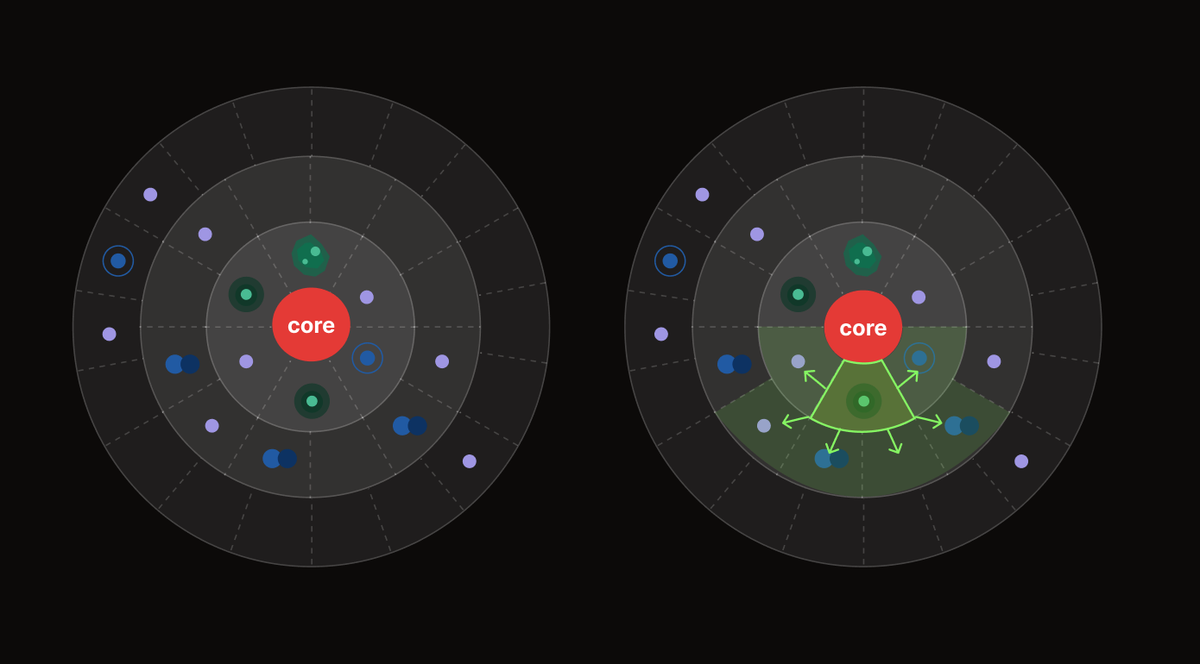
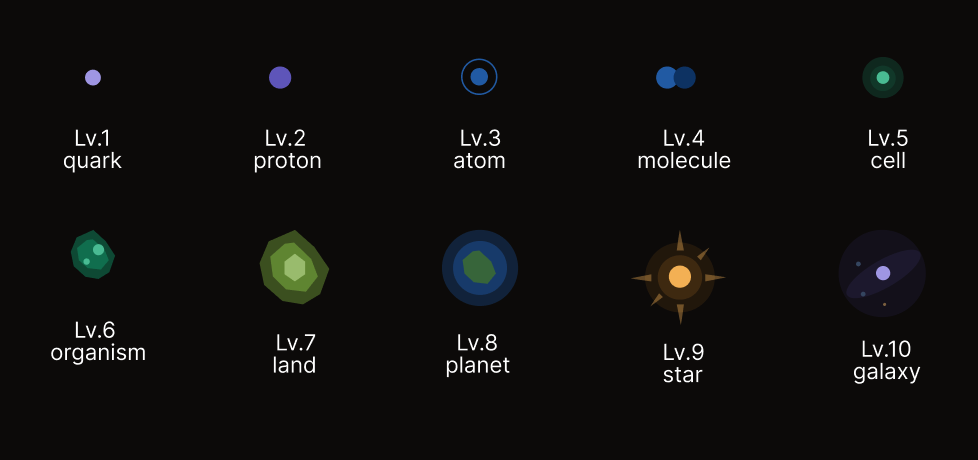
The gameplay fuses the pair-matching of link games with the satisfying clears of match-3: connect identical particles to merge them, evolving from quarks, atoms, and cells all the way to planets, galaxies, and the singularity — every connection is a tiny act of creation. The rules are understood at a glance, no tutorial needed. My design goal was a game anyone from kids to grandparents can pick up instantly — the entry bar pressed to the floor, while the 15-tier evolution chain keeps pulling players forward. The start screen grows with the player: newcomers see guidance; veterans see their collection and a higher challenge.
03
Packaging and craft
Visually I deliberately avoided the candy-colored rush casual games default to, choosing a cold, dark star-trail palette — wrapping a simple mechanic in the quiet of gazing into the cosmos, making it stand out among mini games. Technically it runs on WeChat's native Canvas — no engine, bundle kept at 3 MB. I brought commercial-project standards with me: 44px hit targets per Apple's HIG, frame-level downsampled blur, pooled sound effects — building independently doesn't mean building rough.
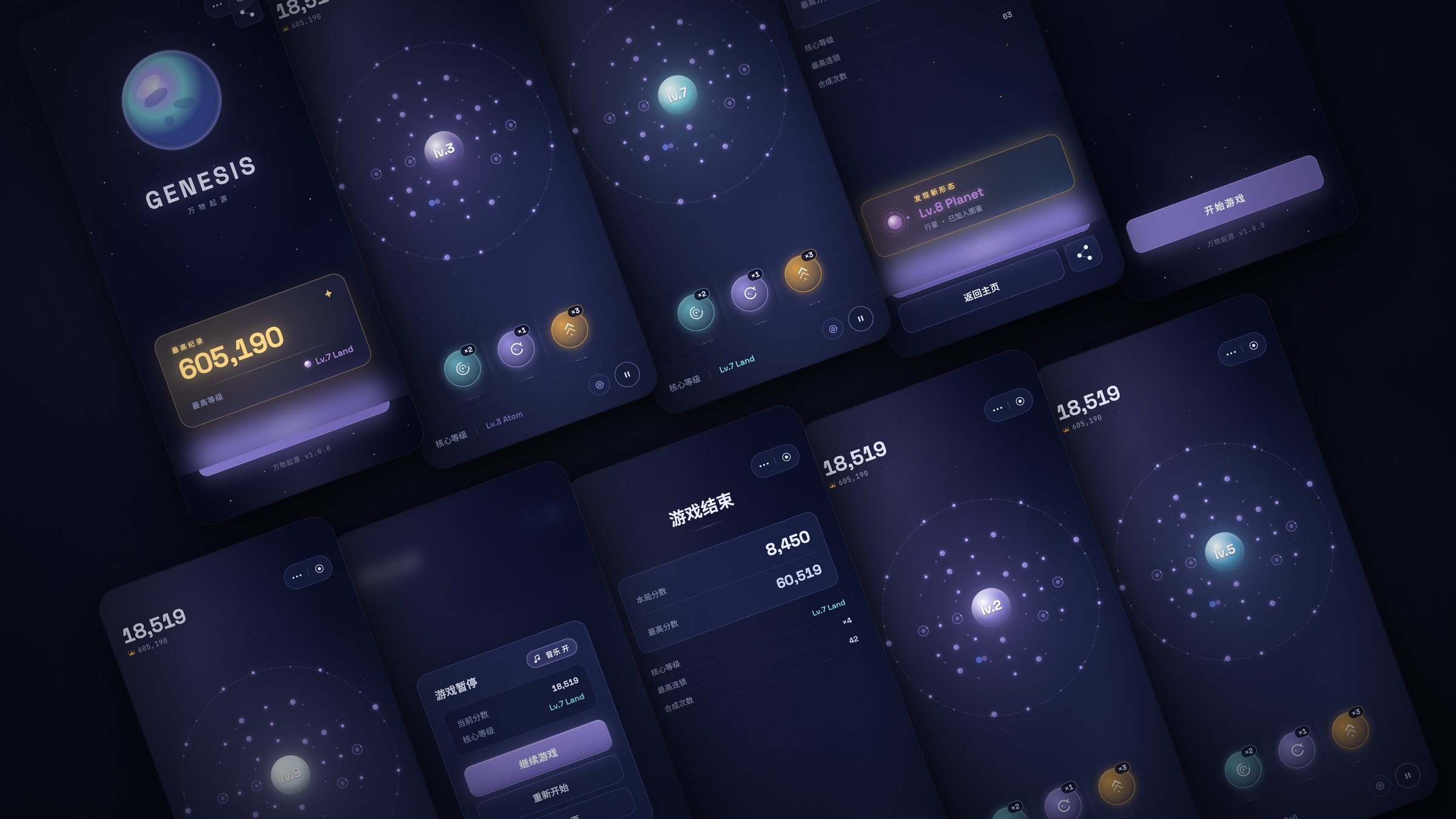
GENESIS · All screens
04
Complete beyond the product
I don't write code — so I paired with AI to produce the code, art, and sound, while making every product decision myself. I also walked the road most designers never do: company registration, copyright filing, platform compliance. A product isn't complete at the interface.
05
Status
Development and the full compliance process are complete; the game is currently in WeChat's store review. A Douyin version is planned next.